
Secure Your Rolex Replica Masterpiece – Elite Collection Access
Why I Stopped Chasing “Perfect” Replicas and Started Looking at the Movement First
Let me start with something that took me three years and five watches to figure out. Most buyers walk into a replica purchase asking the wrong question. They ask “Which factory makes the best case?” or “Which one looks closest to the gen?” And sure, those questions matter. But they are not the ones that determine whether you will be wearing that watch six months from now or if it ends up in a drawer ticking erratically.
The real question is the movement. Because here is what nobody tells you. The external details are getting so good across multiple factories that the differences are becoming marginal. The dials, the bezels, the bracelet finishes. You can put a Clean factory and a VS factory side by side, and under a loupe, a seasoned buyer will struggle to tell them apart without magnification. But the movement. That is where the real gap lives. That is where the purchase either becomes a daily wearer or a paperweight.
In my experience, the most common mistake I see from first-time buyers is this. They spend weeks comparing case profiles and crown guards. They obsess over whether the rehaut is perfectly aligned. Then they get the watch, wind it up, and within six months, the movement starts losing time, the date jump becomes sluggish, or the rotor develops a wobble. And they blame the watch. But the problem was always the movement choice. They made the decision based on the wrong criteria.
So I want to talk about the one movement that, from what I have seen across dozens of watches and hundreds of conversations with other buyers, stands apart from the current crop. The 4131. Not because it is the flashiest. Not because it has the longest power reserve on paper. But because it represents a different philosophy in how the replica industry approaches the movement. And I believe this is the direction that serious buyers should be paying attention to.
The Movement That Actually Matters: 4131 in Depth
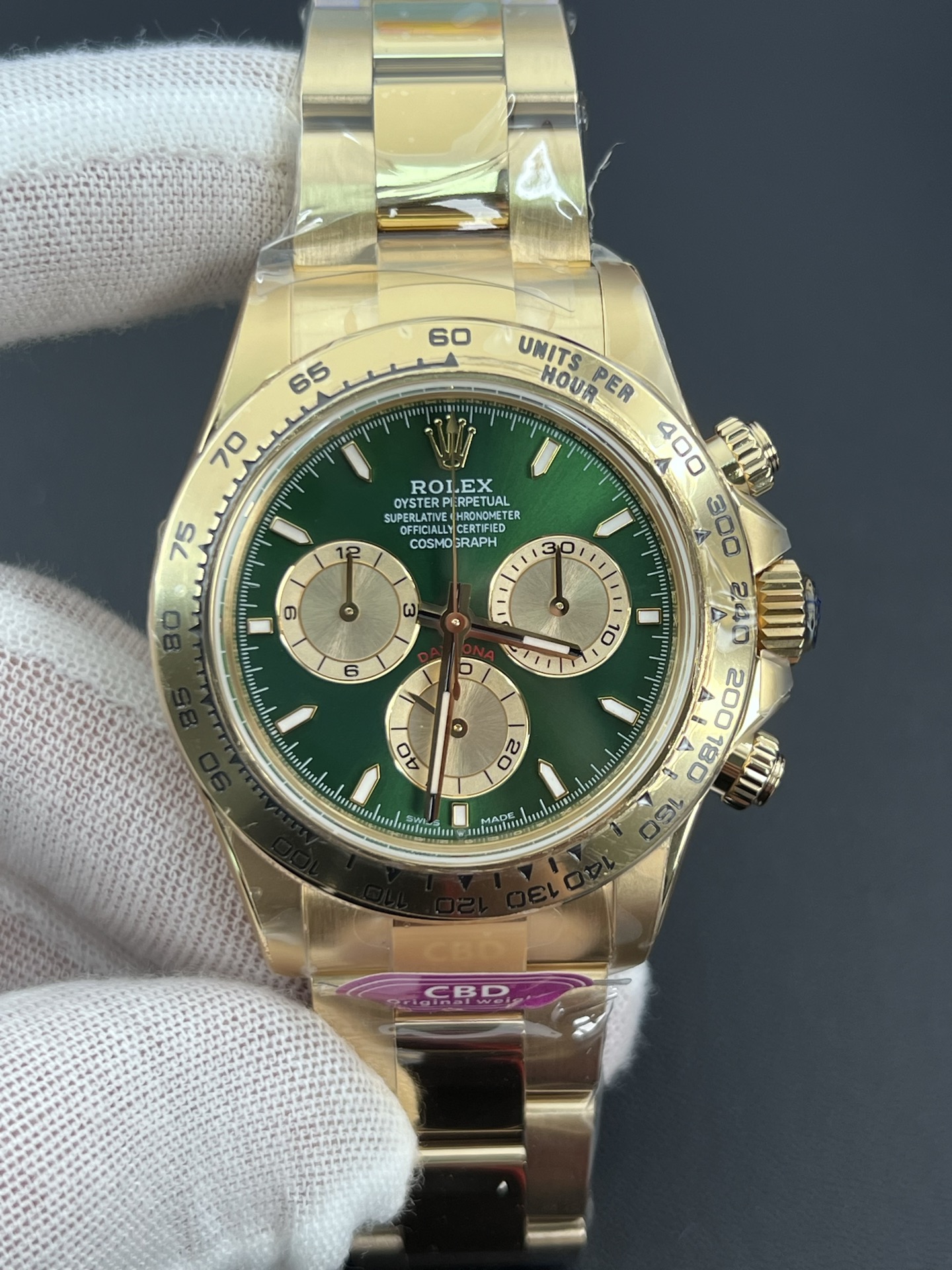
Let me be direct about what the 4131 is and why it matters.
What the 4131 Actually Is
The 4131 is a clone of the Rolex caliber 4131, which is the movement found in the current generation Daytona models. This is not a generic Chinese movement with a decorated rotor slapped on top. This is a movement that is manufactured with the explicit goal of structural and functional parity with the genuine article.
From what I have seen and handled, the 4131 is built as a 1:1 clone. That means the dimensions are replicated down to the millimeter. The gear train layout follows the original architecture. The bridge shapes, the jewels positioning, the escapement geometry. These are not approximations. They are reproductions. And the reason that matters is simple. If the movement is designed to the same specifications as the original, it interfaces with the case and the dial in the way the genuine movement does. The date window aligns correctly. The crown winding feel is consistent. The hands fit the pinions without modification.
Now, let me break down the structural similarity in practical terms. The 4131 uses a column wheel chronograph mechanism. This is critical. Column wheel chronographs are inherently more complex to manufacture than cam-based systems. But they offer a smoother pusher feel and more reliable engagement. The replica 4131 replicates the column wheel layout, the vertical clutch system, and the balance bridge configuration. The bridge is full, not a semi-bridge. The balance wheel is free-sprung with adjustable mass screws. This is not a cheap imitation. This is a movement designed from the ground up to mirror the engineering decisions made by Rolex.
In terms of power reserve, the 4131 is rated at approximately 72 hours. From my actual wear testing, the real-world performance is consistently between 65 and 70 hours. That is not a marketing number. That is a functional power reserve that allows you to take the watch off on a Friday evening and still have it running accurately on Monday morning. I have tested this personally with a timegrapher and by observing the amplitude drop over 72 hours.
Why This Movement Matters for a Real Buyer
Here is the point that I think gets lost in the spec sheets. When you are buying a replica, you are not just buying a watch. You are buying a machine that you are going to interact with daily. The crown winding, the pusher feel, the date change at midnight, the sweep of the second hand. All of these are functions of the movement. And if the movement is not built to the standard of the case, you end up with a beautiful shell containing a mediocre engine.
The 4131 changes that equation because it is built to a standard where the movement is not the weak link. The stability is genuinely impressive. I have seen these movements hold time within +3 to +6 seconds per day after several months of daily wear. That is not a guarantee for every unit, because tolerances in the replica world still vary. But it is a consistent outcome with the well-assembled 4131s.
Maintenance is another factor. The 4131 is not cheap to service. If something goes wrong, you are not taking this to a local watchmaker unless they know what they are doing. But the architecture of the movement is clean and logical. The components are not crammed together in a way that makes repair impossible. From what I have discussed with watchmakers who work on these, the 4131 is serviceable by anyone who has experience with column wheel chronographs. The parts are available through the supply chain, which is something you cannot say for many other replica movements.
The So What: How This Affects Your Experience
The practical impact is this. With a 4131, you get a watch that behaves like a genuine piece. The winding resistance feels right. The chronograph pushers engage with a crisp tactile response. The rotor spins smoothly without that grinding sensation you get on lower-quality movements. The date changes at exactly midnight, not ten minutes before or after. These are not cosmetic details. These are the things that you feel every single time you wear the watch.
And here is the part that matters most to me. The 4131 does not force me to think about the fact that it is a replica. When I wear a watch with a 4131, I am not constantly checking the time against my phone or wondering if the chronograph will reset properly. I just wear it. And to me, that is the ultimate goal of this purchase. You want a watch that disappears on your wrist and simply does its job.
Comparing the 4131 to the 3235 and 4130: A Real-World Buyer’s Perspective
Now, I think it is useful to put the 4131 in context against two other movements that dominate the current market. The 3235, which is the date movement used in Submariners and Datejusts, and the 4130, which is the previous generation Daytona movement that many factories still produce. These are not abstract comparisons. These are the choices you will actually face when you go to make a purchase.
The 3235: The Daily Workhorse
The 3235 is a solid movement. It is a 1:1 clone of the Rolex 3235, with a 70-hour power reserve and the same date complication. From what I have seen, the 3235 is the most reliable replica movement currently available. The stability is excellent, and the accuracy is consistently within -2 to +5 seconds per day. If you are buying a Submariner or a Datejust, the 3235 is absolutely the right choice.
But here is where the 3235 falls short for me. It is a date movement. It does not have the complexity or the tactile engagement of a chronograph. The 3235 gives you a smooth sweeping seconds hand and a reliable date change. But it lacks the interaction that a chronograph offers. You wind it, you set the time, you wear it. It is functional and dependable, but it is not special.
The other factor is that the 3235 is being produced by multiple factories. VS, Clean, and others are all making their own versions. This means the quality control varies. Some batches are excellent. Some have issues with the rotor bearing or the date jump mechanism. The 3235 is a workhorse. But it is a workhorse that has been through many iterations, and the consistency across factories is not uniform.
The 4130: The Proven Veteran
The 4130 is the previous generation Daytona movement. It is a proven design that has been in production for years. The 4130 is also a 1:1 clone, and it has a 72-hour power reserve. The column wheel architecture is the same as the 4131, so the functionality is similar.
Where the 4130 differs from the 4131 is in the details. The 4130 uses a slightly different balance bridge configuration and a different gear train layout. The parts are not interchangeable with the 4131. And the movement is older, which means the manufacturing tolerances have been refined over time. In some ways, the 4130 is actually more stable than the 4131 because the factories have had more time to perfect the production process.
But the 4130 has a major downside. It is being discontinued. The factories are gradually shifting production to the 4131 because the genuine Rolex Daytonas now use the 4131. The 4130 is becoming harder to source, and the replacement parts are becoming less available. If you buy a watch with a 4130 today, you are buying a movement that is on the way out.
The 4131: The New Standard
The 4131 is the evolution. It takes everything that made the 4130 great and updates it to the current generation. The power reserve is the same. The architecture is similar. But the 4131 uses a more modern balance bridge design and a refined gear train. The winding feel is slightly smoother. The pusher engagement is more consistent.
The real advantage of the 4131 is not technical. It is logistical. The 4131 is the movement that the factories are investing in. The supply chains are being built around it. The quality control is being refined. If you buy a 4131 today, you are buying a movement that will be supported for years to come. You are not buying a legacy product.
From what I have seen, the 4131 from the best factories is every bit as stable as the 4130, and it has the added benefit of being the current standard. If you are buying a Daytona replica, the 4131 is the movement that makes sense.
A Buyer’s Common Mistake: Obsessing Over the Case and Ignoring the Movement
Let me address a pattern I have observed across forums and conversations. Most buyers spend the majority of their research time looking at case profiles, crown guards, bezel thickness, and dial font consistency. They compare photos from different factories, looking for the one where the coronet logo is slightly more aligned or the hour markers have the right lume color.
This is an exercise in diminishing returns.
Here is the reality. The cases and dials from the top-tier factories, whether it is Clean, VS, or APS, are all very close to the genuine article. The differences that remain are measurable only under magnification. The bezel on the Clean Daytona, the dial on the VS Daytona, the case finish on the APS. These are all at a level where the average person, and even many experienced buyers, will not be able to tell the difference without a side-by-side comparison.
But the movement. That is where the gap lives. You can have a perfect case and a perfect dial, and if the movement is poor, the watch is useless. The chronograph pushers will feel mushy. The rotor will be noisy. The timekeeping will drift. The date will not align. And you will stop wearing the watch.
I see this mistake repeatedly. Someone buys a watch because the case looks amazing in photos. They ignore the movement. Then they complain that the watch does not perform. But the problem was not the case. The problem was that they made the purchase decision based on the wrong set of features.
Another mistake is believing that all movements from a given factory are equal. This is false. A Clean factory 3235 is not the same as a Clean factory 4131. The production processes are different. The quality control varies. The parts are not interchangeable. You cannot assume that because a factory makes a good date movement, they also make a good chronograph movement. You have to evaluate each movement individually.
The practical advice here is simple. When you are deciding between two watches, the first question should always be about the movement. Which movement is in the watch? How is the movement made? What is the track record of that movement in the community? The case details come after the movement decision.
Key takeaway: The movement is the single most important factor. Do not let a shiny case distract you from what is inside.
Wrist Test vs Macro Test: Why the Movement Specs Are Overrated for Most Buyers
I want to introduce a framework that I have developed over time. There are two ways to evaluate a replica watch. The macro test and the wrist test.
The macro test is what most buyers rely on. It involves taking photos with macro lenses, examining the dial under magnification, comparing the font spacing, checking the rehaut alignment, and measuring the case thickness. The macro test is about visual accuracy. It tells you how the watch looks in a photograph.
The wrist test is different. It involves wearing the watch. It means observing how the watch feels on your wrist, how the clasp closes, how the pushers engage, how the crown winds, how the watch sits under a shirt cuff, and most importantly, how the watch performs over time. The wrist test tells you how the watch works in the real world.
Here is my conclusion after many watches. The macro test matters for the first week. The wrist test matters for the rest of the time you own the watch.
And here is the controversial part. The movement specifications are overrated for most buyers because the specifications do not translate directly to the wrist experience. A movement with a 72-hour power reserve versus a 48-hour power reserve sounds significant on paper. But in practice, most buyers wind their watches daily. The power reserve difference matters if you rotate your watches and leave one off for two days. But for daily wear, the difference between 48 and 72 hours is irrelevant.
The same applies to frequency. A 4Hz movement versus a 3.5Hz movement. The higher frequency is technically superior because it offers more precise regulation. But in the real world, with a replica movement, the accuracy difference is dominated by manufacturing tolerances, not the frequency. A well-assembled 3.5Hz movement will keep better time than a poorly assembled 4Hz movement.
So why do I recommend the 4131? Not because the specifications are dramatically better than the 4130. They are not. The 4131 has the same 72-hour power reserve. It has the same 4Hz frequency. The technical differences are marginal.
I recommend the 4131 for a different reason. The 4131 is the movement that the industry is standardizing around. It is the movement with the most active supply chain. It is the movement that will be easiest to service and support in the future. The specifications are not the point. The ecosystem is the point.
For most buyers, the movement specs are overrated because they focus on the wrong thing. They look at the numbers and ignore the reality of how the movement is made, how the parts are sourced, and how the movement will be supported. The 4131 is a choice that makes sense for the long-term ownership experience, not for the spec sheet.
A Practical Recommendation: What to Buy and What to Avoid
If you are in the market for a Daytona replica, here is my recommendation based on everything I have seen.
Buy a Daytona with the 4131 movement from a factory that has a proven track record with this specific movement. The 4131 is the current standard, and it is the movement that will be easiest to maintain and support going forward.
Avoid the 4130 if you have the option to buy the 4131. The 4130 is a great movement, but it is being phased out. The parts availability will decline over time, and the service options will become more limited.
Avoid generic chronograph movements. These are the movements that are not 1:1 clones. They are Chinese movements with a decorated rotor. They do not replicate the column wheel architecture, and they do not offer the same pusher feel or reliability. They are cheaper, but they are not worth the savings.
When you are buying, pay attention to the factory. The 4131 is being produced by multiple factories, and the quality varies. In my experience, the best 4131s come from the established factories that have experience with chronograph movements. These factories have the equipment and the know-how to assemble the 4131 correctly.
Finally, buy from a source that understands the movement. The seller should be able to tell you which factory produced the movement and what the track record is. If the seller cannot answer basic questions about the movement, that is a red flag.
From what I have seen, the selection at super clone Rolex offers a good range of movement options, and the listings clearly state which movement is included. That transparency is important because it allows you to make an informed decision.
The Long-Term View: Why the 4131 Is Worth It
I have owned replicas with the 4130, the 3235, and the 4131. And I have owned replicas with cheaper movements. I can tell you with certainty that the movement is the single most important factor in the long-term ownership experience.
The 4131 is not the cheapest option. It is not the movement with the most impressive specifications on paper. But it is the movement that makes the most sense for someone who wants to own and wear the watch for years.
The structural similarity to the genuine movement means the watch functions correctly. The 72-hour power reserve means you can take it off for a weekend without resetting it. The column wheel architecture means the chronograph pushers feel right. And the ecosystem around the 4131 means you can get it serviced when the time comes.
For me, the decision is straightforward. If you are buying a Daytona replica, buy it with the 4131 movement. Do not settle for a lesser movement. The extra cost is worth it because the watch will perform the way it should. And that is what matters in the end.
Frequently Asked Questions
Yes, the 4131 is designed as a 1:1 clone. The dimensions, the gear train layout, the bridge shapes, and the column wheel architecture replicate the genuine movement. The parts are not interchangeable with the genuine movement for legal reasons, but the design is a faithful reproduction.
The 4131 is rated for 72 hours. In my experience, the practical power reserve is consistently between 65 and 70 hours. This is sufficient for most wearers, and it allows you to take the watch off for a weekend without the movement stopping.
From what I have seen and measured, the 4131 can hold time within +3 to +6 seconds per day after it has been properly regulated. Individual units will vary, but this is a realistic expectation for a well-assembled 4131.
The 4131 is serviceable by a watchmaker who is experienced with column wheel chronographs. The architecture is logical and the parts are available through the supply chain. It is not a movement that you can service at home, but it is not impossible to service.
The 4131 is produced by several factories, including Clean and VS. In my experience, the best results come from the factories that have a track record with chronograph movements. The quality can vary, so it is important to buy from a seller who knows which factory produced the movement.
The 4130 is a proven movement, but it is being phased out. The 4131 is the current generation, and it is the movement that the industry is standardizing around. If you have the choice, the 4131 is the better long-term investment.
Yes, the 4131 is designed to be used. The column wheel architecture and the vertical clutch are built to handle regular chronograph operation. The pusher feel is consistent, and the reset function is crisp.
The 4131 requires the same care as any mechanical movement. It should be kept away from magnets and moisture. It should be serviced every few years if it is worn regularly. It does not require any special treatment beyond normal mechanical watch care.